
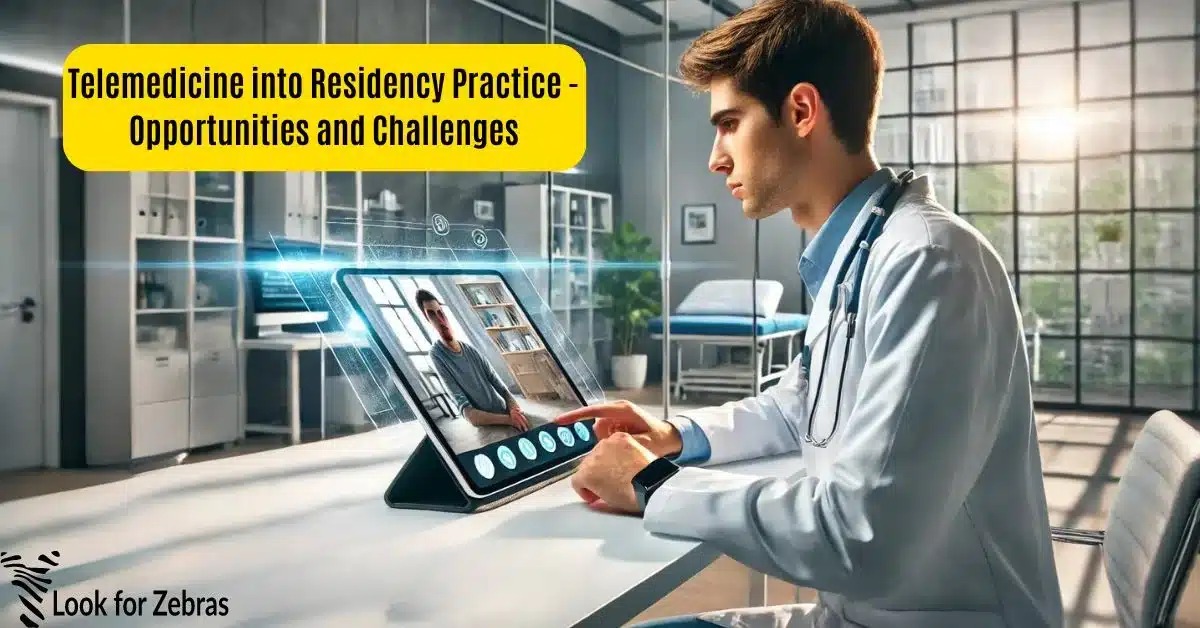
In recent years, telemedicine has emerged as a groundbreaking tool in healthcare, revolutionizing the way patients receive medical attention and doctors deliver care. This transformation isn’t limited to established physicians; it’s also becoming an integral part of residency practice.
Residents, or doctors in training, are increasingly utilizing telemedicine to interact with patients, consult with specialists, and even conduct virtual exams. This shift presents a plethora of opportunities for both residents and patients alike, offering greater accessibility to healthcare services, enhanced learning experiences, and the potential for improved patient outcomes.
However, some challenges must be addressed while incorporating telemedicine into residency practice including navigating regulatory frameworks, ensuring the security and privacy of patient data, and adapting to new modes of communication and care delivery. Moreover, there are concerns about maintaining the quality of care and clinical education in a virtual setting, as well as addressing disparities in access to technology among patients.
Despite these challenges, the integration of telemedicine into residency training holds immense promise for shaping the future of healthcare delivery and preparing residents for the evolving landscape of medicine.
How do Residents Use Telemedicine in Their Medical Practice?
Residents, like other healthcare professionals, can utilize telemedicine in their medical practice to provide remote healthcare services to patients. Here’s how residents might use telemedicine:
Virtual Consultations: Residents can conduct virtual consultations with patients using video conferencing platforms or telemedicine software. They can discuss symptoms, review medical history, and provide medical advice remotely during their implementation of telemedicine.
Follow-up Appointments: Residents can use telemedicine for follow-up appointments with patients who don’t require in-person visits. This can be particularly convenient for patients with chronic conditions or those who need regular check-ins.
Remote Monitoring: Residents can utilize telemedicine technologies to remotely monitor patients’ vital signs, symptoms, or medication adherence. This can be especially useful for managing patients with chronic diseases like diabetes, hypertension, or heart conditions.
Telepsychiatry and Counseling: Residents specializing in psychiatry or mental health can offer telepsychiatry services for therapy sessions, psychiatric evaluations, and medication management remotely. This allows patients to access mental health care more conveniently, particularly in areas with limited mental health resources.
Education and Training: Telemedicine can also be used for educational purposes within residency programs. Residents can participate in virtual grand rounds, teleconferences, or webinars to enhance their medical knowledge and skills.
Consultations with Specialists: Residents can use telemedicine to consult with specialists for second opinions or complex cases. This can facilitate collaboration between healthcare providers and improve patient care outcomes.
Remote Prescription Management: Residents can prescribe medications electronically and manage prescriptions remotely through telemedicine platforms. This ensures timely access to medications for patients without the need for in-person visits.
Remote Patient Education: Residents can provide patient education materials, resources, and guidance remotely via telemedicine platforms. This can include discussing treatment plans, explaining procedures, or answering patients’ questions about their healthcare.
Teletriage: In emergency medicine or primary care settings, residents can use telemedicine for triaging patients to determine the urgency of their medical needs. This can help streamline patient flow and optimize resource allocation in healthcare facilities.
Research and Data Collection: Residents can participate in telemedicine-based research studies or clinical trials by remotely collecting patient data, conducting surveys, or monitoring study participants.
Overall, telemedicine implementation offers residents a versatile tool to expand their clinical practice, improve patient access to care, and enhance their medical education and training.
What are The Telemedicine Opportunities Available for Medical Residents?
Telemedicine offers numerous opportunities for medical residents, providing them with unique experiences and advantages in their training and practice:
Exposure to Remote Patient Care: Medical residents to gain exposure to remote patient care, enabling them to interact with patients through virtual platforms. This experience helps them understand how to effectively communicate, diagnose, and treat patients remotely, which is becoming increasingly important in modern healthcare.
Increased Flexibility and Accessibility: Telemedicine offers flexibility in scheduling patient consultations, allowing medical residents to balance their clinical duties with educational activities. It also increases accessibility to healthcare for patients who may have difficulty accessing traditional in-person care, which broadens the resident’s exposure to diverse patient populations and medical conditions.
Enhanced Communication Skills: Communicating effectively through telemedicine requires specific skills, such as clear articulation, active listening, and the ability to convey empathy without physical presence. Medical residents can hone these skills through telemedicine encounters, which will benefit them in all areas of their medical practice.
Opportunities for Remote Consultations and Second Opinions: Medical residents to seek remote consultations and second opinions from specialists located elsewhere. This facilitates interdisciplinary collaboration and enhances the quality of patient care by ensuring that complex cases receive comprehensive evaluation and treatment recommendations.
Integration of Technology into Healthcare: Telemedicine exposes medical residents to various telehealth technologies and platforms, familiarizing them with electronic health records (EHRs), teleconferencing software, remote monitoring devices, and other digital tools. This experience prepares them for the increasingly technology-driven nature of modern healthcare delivery.
Research and Innovation: Opportunities for medical residents to engage in research and innovation projects focused on telehealth interventions, patient outcomes, and healthcare delivery models. By participating in such initiatives, residents can contribute to advancing the field of telemedicine while gaining valuable research experience.
Patient Education and Engagement: Medical residents can educate patients about their health conditions, treatment options, and preventive measures. They can also promote patient engagement and self-management by providing resources, support, and follow-up care remotely.
Global Health Outreach: Medical residents to participate in global health outreach initiatives by delivering virtual healthcare services to underserved populations in remote or resource-limited settings. This allows residents to make a meaningful impact on healthcare disparities worldwide while gaining cross-cultural competencies.
Overall, telemedicine offers medical residents a range of opportunities to enhance their clinical skills, expand their knowledge base, and contribute to the advancement of healthcare delivery, positioning them for success in their future medical careers.
What are the Challenges Faced in Telemedicine By Residents?
Residents, like other healthcare professionals, encounter several challenges in the realm of telemedicine. These challenges can include:
Limited Experience: Residents may have limited exposure to telemedicine during their medical training. Lack of familiarity with telemedicine platforms, technology, and protocols can pose initial hurdles.
Technological Issues: Technical glitches such as poor internet connectivity, platform malfunctions, or hardware failures can disrupt telemedicine sessions, affecting the quality of care delivery and patient satisfaction.
Regulatory and Legal Concerns: Understanding and adhering to the complex regulatory landscape surrounding telemedicine, including licensure requirements, privacy laws (such as HIPAA in the United States), and reimbursement policies, can be challenging for residents.
Communication Barriers: Effective communication is essential in telemedicine. Residents may find it challenging to establish rapport, convey empathy, or accurately interpret non-verbal cues during virtual consultations, leading to potential misunderstandings or dissatisfaction among patients.
Clinical Assessment Limitations: Conducting physical examinations remotely poses challenges for residents, as they may rely primarily on patient-reported symptoms and visual observations. Limited access to diagnostic tools and the inability to perform hands-on assessments can impact diagnostic accuracy and treatment decisions.
Cultural and Socioeconomic Factors: Residents may encounter cultural and socioeconomic barriers that affect patients’ access to and acceptance of telemedicine services. Language barriers, digital literacy limitations, and lack of access to appropriate technology can hinder effective communication and engagement.
Training and Education Needs: Residents require adequate training and ongoing education in telemedicine practices to ensure competency in delivering virtual care. This includes training in virtual communication skills, telehealth platforms, and navigating ethical and legal considerations unique to telemedicine.
Workflow Integration: Integrating into existing clinical workflows can be challenging. Residents may face difficulties coordinating care with other healthcare providers, managing scheduling logistics, and ensuring seamless transitions between virtual and in-person care settings.
Patient Confidentiality and Data Security: Maintaining patient confidentiality and ensuring data security are paramount. Residents must adhere to strict privacy regulations and implement secure communication channels to protect patient information from unauthorized access or breaches.
Professional Isolation: Contribute to feelings of professional isolation among residents, particularly if they predominantly engage in remote consultations. Lack of direct interaction with colleagues and limited opportunities for peer learning and collaboration may impact resident morale and professional development.
Addressing these challenges requires a multifaceted approach, including comprehensive training programs, supportive technological infrastructure, clear regulatory guidelines, and ongoing quality improvement initiatives tailored to the unique needs of residents in telemedicine practice.
What Are Telemedicine Courses for Doctors?
Here are some examples:
American Telemedicine Association (ATA):
The ATA offers various educational resources and courses focusing on telemedicine, including webinars, certificate programs, and conferences. These programs cover topics such as telehealth fundamentals, best practices, and legal considerations. This is one platform offering telemedicine courses for doctors.
Johns Hopkins Training Center:
Johns Hopkins provides online courses and workshops on telemedicine and telehealth, covering areas such as telemedicine technology, virtual patient care, and telehealth program implementation as a part of their telemedicine course for doctors.
Telemedicine and Telehealth Service Provider Certification (TTSPC):
This certification program is designed to train healthcare providers, including residents, in delivering telemedicine services effectively and ethically. It covers clinical, technical, and regulatory aspects of telemedicine practice.
University-based Courses:
Many universities and medical schools offer telemedicine courses as part of their curriculum or continuing medical education programs. These courses may cover various aspects, including teleconsultation, telemonitoring, and ethics. You can select from their plethora of telemedicine courses for doctors.
American College of Physicians (ACP) Telemedicine Toolkit:
The ACP offers resources and tools, including online modules and webinars, to help healthcare professionals integrate into their practice. These resources cover topics such as telemedicine implementation, reimbursement, and patient communication. This is another popular platform that offers telemedicine courses for doctors.
Center for Connected Health Policy (CCHP):
CCHP provides online resources and webinars on telehealth policy, regulations, and reimbursement. While not specifically designed for medical residents, these resources can be valuable for understanding the regulatory landscape of telemedicine practice. This is an excellent online resource for telemedicine courses for doctors.
Telemedicine Bootcamps:
Some organizations and companies offer intensive boot camps or workshops designed to provide hands-on training and practical skills in telemedicine delivery. These programs often include simulated telemedicine encounters and case studies.
Medical residents interested in telemedicine education should also explore online platforms like Coursera, edX, and Udemy, as they may offer relevant courses, digital health, and related topics. Additionally, staying updated with professional organizations, journals, and conferences in telemedicine can provide valuable learning opportunities and networking resources.
What is the Telemedicine Implementation Framework?
The implementation framework is a multifaceted approach aimed at seamlessly integrating telehealth services into existing healthcare systems while ensuring quality, accessibility, and efficiency. At its core, this framework entails comprehensive planning, robust technological infrastructure, regulatory compliance, and stakeholder engagement.
Firstly, strategic planning involves identifying target populations, defining telemedicine services, and establishing goals aligned with healthcare objectives. This stage also entails assessing existing resources, including human capital, technological infrastructure, and financial considerations, to determine the feasibility and scalability of adoption.
Secondly, the technological infrastructure forms the backbone of telemedicine implementation, encompassing secure communication channels, interoperable electronic health records (EHR), teleconsultation platforms, and remote monitoring devices. This infrastructure must adhere to stringent standards for data privacy, security, and interoperability to safeguard patient information and facilitate seamless information exchange between healthcare providers.
Moreover, ensuring user-friendly interfaces and reliable connectivity is paramount to enhancing the user experience and promoting widespread adoption among both healthcare professionals and patients. Through effective collaboration between healthcare organizations, technology vendors, and regulatory bodies, the implementation framework can foster innovation and drive positive health outcomes on a global scale.
References
https://www.researchgate.net/publication/220200890_Telemedicine_Challenges_and_opportunities/
https://bmcmededuc.biomedcentral.com/articles/10.1186/s12909-023-04295-0/
FAQs
Telemedicine offers numerous opportunities, including increased access to healthcare services for remote or underserved populations, convenience for patients through virtual consultations, reduced healthcare costs by minimizing unnecessary hospital visits, and improved monitoring of chronic conditions through remote patient monitoring technologies.
Healthcare providers may encounter challenges such as ensuring patient privacy and data security in virtual consultations, navigating complex regulatory frameworks across different regions or countries, integrating telemedicine into existing healthcare systems and workflows, addressing technological barriers for patients with limited access to the internet or digital devices, and maintaining the quality of care and patient satisfaction in virtual settings.
Telemedicine can strengthen the doctor-patient relationship by enhancing communication and accessibility. It enables more frequent interactions between patients and healthcare providers, fosters greater patient engagement in their healthcare management, and allows for personalized care delivery. However, some patients may perceive a loss of personal connection compared to in-person visits, necessitating strategies to maintain rapport and trust in virtual consultations.
Legal and regulatory challenges in telemedicine include licensure requirements for healthcare providers practicing across state or national borders, reimbursement policies for telehealth services from insurers and government healthcare programs, liability concerns related to remote diagnosis and treatment, adherence to telemedicine-specific regulations regarding prescription practices and informed consent, and compliance with healthcare privacy laws such as HIPAA (Health Insurance Portability and Accountability Act) in the United States.
Telemedicine has the potential to bridge geographical and socioeconomic barriers to healthcare access by enabling remote consultations and medical services delivery. It can reach individuals in rural or isolated areas with limited access to healthcare facilities, provide specialist consultations to patients without requiring travel, offer language interpretation services for non-native speakers, and facilitate follow-up care for patients with transportation or mobility challenges. However, disparities in digital literacy, internet connectivity, and access to appropriate technology must be addressed to ensure equitable access to telemedicine services.